
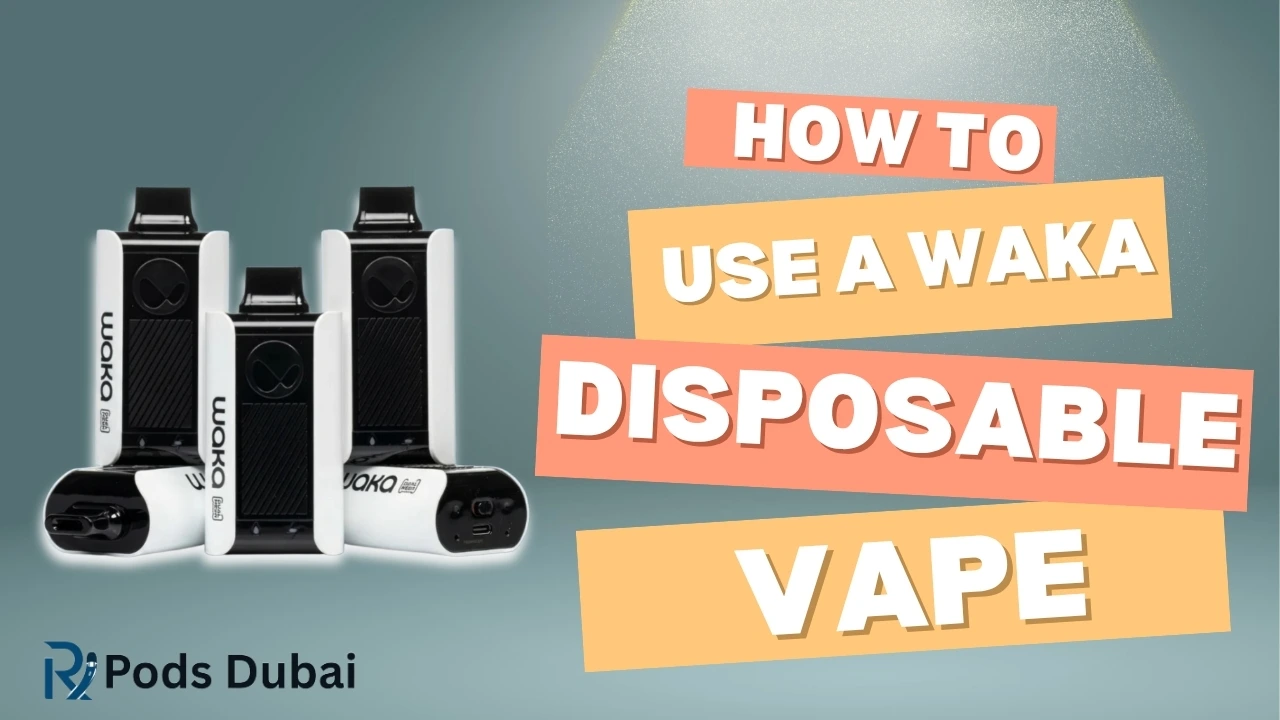
A Waka disposable vape is ready to use straight out of the box. Remove the packaging, silicone mouthpiece cap, and any airflow stickers, then inhale gently on the mouthpiece. The device activates automatically — no buttons, no setup. The LED lights up, and vapour production begins right away.
Before You Start Using a Waka Vape
A few quick checks before using your Waka vape for the first time can help you avoid the most common issues later.
- Check the packaging seal. It should be fully intact, with no signs of tampering or re-sealing.
- Verify authenticity. Buy from a known retailer rather than an unverified third-party seller — this is the single biggest predictor of whether a device performs as expected.
- Check the nicotine strength on the label. Strengths vary by model, and it’s worth knowing what you’re using before your first draw.
- Know whether your model is rechargeable. Some Waka devices, including higher-puff models like the Waka PA25000, include a Type-C charging port. Simpler, lower-puff models often don’t. Check the bottom of the device before assuming either way.
Buying from a reliable source for your authentic vape in the UAE removes most of this guesswork from the start.
How to Tell if Your Waka Is Authentic
Counterfeit disposables are a real issue in the vape market, and Waka devices are no exception. A few warning signs to check before you rely on a device for daily use:
- Packaging consistency. Genuine Waka packaging has consistent print quality, spelling, and branding. Blurry logos or inconsistent fonts are a red flag.
- Authentication codes. Many genuine Waka boxes include a scratch-off code or QR code for verification — if your packaging is missing one where it should have one, that’s worth questioning.
- Unusual taste on the first puff. A flavour that tastes noticeably “off,” overly chemical, or nothing like the listed flavour profile can indicate a counterfeit or poorly stored device.
- Leaking straight out of the box. Genuine, properly stored disposables shouldn’t leak on first use. Leaking right away often points to a manufacturing defect or counterfeit liquid.
If you notice more than one of these signs, it’s worth going back to wherever you bought it rather than continuing to use the device.
How a Waka Disposable Vape Works
Waka disposable vapes are designed for simplicity. There’s no power button, no settings menu, and nothing to assemble. The device is a self-contained disposable vape device with a built-in battery, an internal coil, and pre-filled e-liquid, all triggered by your inhale.
When you draw air through the mouthpiece, a sensor detects the airflow and powers the coil. The coil heats the e-liquid, and vapour forms almost instantly. This is called “draw activation,” and it’s the same basic mechanism across nearly every disposable vape on the market, including the WAKA SoPro line and the Waka PA25000.
Step-by-Step Instructions
Step 1 — Unbox and Remove Protection
Before you take your first puff, check the device carefully.
- Remove the outer packaging completely.
- Pull off the small silicone plug covering the mouthpiece. This stops the e-liquid from leaking during shipping.
- Check the bottom and sides of the device for any airflow stickers or tape covering small vent holes. Peel these off if present.
- Inspect the mouthpiece and body for any visible damage or liquid leakage before use.
Skipping this step is the most common reason new users think their device is “broken” when it’s actually just sealed.
Step 2 — Start Inhaling
Once the device is unsealed, using it is straightforward.
- Place your lips gently around the mouthpiece, the same way you would with a straw.
- Inhale slowly and steadily — there’s no need to draw hard or fast.
- Within a second, the internal sensor activates the coil, and vapour begins forming.
- Exhale normally.
A common beginner mistake is to inhale sharply right away. This can flood the coil and produce a wet, harsh hit. Slow and steady wins here.
Step 3 — Adjust Airflow and Mode (Select Models)
Some Waka devices, including certain WAKA SoPro versions, include a bottom-mounted switch for adjusting airflow or vapour output. If your device has one:
- Locate the small switch or button near the base.
- Toggle it to switch between standard and boost settings.
- Take a test puff after switching to feel the difference in airflow and vapour density.
Not every Waka model includes this feature, so check your specific device before assuming it’s missing a function.
Setup Checklist
Quick reference before your first puff:
✓ Remove all outer packaging
✓ Remove the silicone mouthpiece cap
✓ Remove any airflow stickers
✓ Inhale slowly on first use
✓ Check the LED responds normally
✓ Charge first if the LED blinks or the vapour feels weak
Common First-Use Mistakes
A few small mistakes account for most “my Waka isn’t working” complaints:
- Not removing the mouthpiece cap. This is by far the most common issue — and the easiest to fix.
- Inhaling too hard, too fast. This can cause coughing or a flooded coil rather than smooth vapour.
- Covering the airflow vents with your fingers. Some models have small intake holes on the side; blocking them restricts vapour production.
- Assuming it needs charging right away. A brand-new disposable vape should already be charged. If it’s not producing vapour on a fresh unit, the issue is almost always the sealed mouthpiece, not the battery.
- Storing it somewhere hot. Leaving a disposable vape in direct sunlight or a hot car can affect e-liquid consistency and battery performance.
If you’ve ruled all of these out and the device still isn’t working, move on to the troubleshooting section below.
How to Charge a Waka Disposable Vape
Not all disposable vapes are rechargeable, but many newer Waka models — including higher-puff-count devices like the Waka PA25000 — include a built-in rechargeable battery to extend the device’s usable life as the e-liquid runs low.
Signs the Battery Is Low
Watch for these signals:
- The LED indicator blinks repeatedly when you inhale.
- Vapor production feels noticeably weaker than usual.
- Hits feel “thinner” or less satisfying even though there’s still visible e-liquid in the tank.
Charging Steps
- Locate the charging port — usually a small Type-C port on the bottom of the device.
- Connect a Type-C cable (most standard phone chargers will work).
- Charge until the LED indicator shows a steady, solid light, signalling a full charge.
- Disconnect the cable promptly once charging is complete. Leaving it plugged in unnecessarily can shorten battery lifespan over time.
- Avoid charging overnight unattended, and use a standard low-wattage USB port rather than a fast-charging block when possible.
It’s also best to avoid puffing on the device while it’s actively charging. Drawing on it mid-charge can affect coil performance and put unnecessary strain on the battery. Let it finish, then use it.
If your device has no charging port at all, it’s a fully disposable model — once the e-liquid or battery runs out, it’s meant to be replaced rather than charged.
Can You Refill a Waka Disposable Vape?
No — Waka disposables are designed as closed systems. The tank, coil, and battery are sealed together as one unit, with no intended way to add more e-liquid once it runs out.
Some people attempt to pry open the casing and refill the tank manually, but this carries real risks:
- It can damage the seal around the coil, causing leaks.
- It can short-circuit the battery if liquid reaches the wrong components.
- Mixing in liquid not designed for that specific coil can affect flavour and vapour quality, or cause a burnt taste almost immediately.
If you’re going through disposables quickly and want more control over refilling, an open-system or pod-based device is built for that purpose — a Waka disposable simply isn’t.
Troubleshooting Common Issues
| Issue | Likely Cause | Fix |
| No vapour at all | Mouthpiece cap still on, or airflow blocked | Remove cap and stickers, check vents |
| Burnt taste | Coil running dry, e-liquid depleted | Replace the device |
| LED blinking constantly | Low battery | Charge fully via Type-C |
| Weak vapor | The battery is low, or the coil is wearing out | Charge first; replace if no improvement |
| Gurgling sound | E-liquid flooding the coil | Hold the device upright, draw gently |
| Leaking from the mouthpiece | Stored on its side or in heat | Store upright, away from sunlight |
| LED blinking, but no hit | Sensor not detecting airflow, or the battery is critically low | Check for blockages first, then charge fully |
| The device feels clogged | Condensation buildup in the mouthpiece | Gently tap the mouthpiece down, wipe and try again |
If you’ve gone through charging and cleaning checks and the device still underperforms, it has likely reached the end of its usable life.
Airflow Modes Explained
Many Waka disposables, particularly WAKA SoPro models, give you a choice between two airflow settings.
Standard Mode
Standard mode is the default setting on most devices. It delivers a balanced draw with moderate vapour output, and it’s generally easier on the battery — meaning more puffs per charge cycle. This is the better setting for all-day, casual use.
Boost Mode
Boost mode opens the airflow further, increasing both vapour density and flavour intensity per puff. It draws more power from the battery, so expect faster battery drain if you use it consistently. It also draws through the e-liquid faster, which can shorten the total puff count compared to using standard mode for the same period.
There’s no universally “better” mode — it depends on whether you prioritise flavour intensity or battery and liquid longevity on a given day.
How Long a Waka Disposable Lasts
Lifespan depends on the specific model’s puff count, your draw length, and how often you use boost mode. Higher-capacity devices like the Waka PA25000 are built for extended use precisely because they combine a larger e-liquid reservoir with a rechargeable battery.
As a general rule, shorter, more frequent puffs make the e-liquid last longer than long, deep draws. Using standard mode most of the time and saving boost mode for when you actually want it also stretches total usage.
How Many Puffs Per Day Is Typical?
There’s no single “correct” number — it depends heavily on individual habits and prior usage patterns. That said, a few general patterns are worth knowing:
- Draw duration matters more than puff count alone. A handful of long, deep draws can use as much e-liquid as many short ones.
- Frequency tends to track habit, not need. Many users find they puff more often out of routine than out of any deliberate choice.
- Heavy, constant use shortens the device’s lifespan faster than its rated puff count suggests. Manufacturer puff counts are typically based on average draw length, so frequent boost-mode or chain-vaping use will burn through a device faster than the listed number implies.
If you’re noticing your device running out far faster than expected, drawing length and frequency — not a faulty unit — is usually the reason.
When to Replace Your Waka Disposable
Even rechargeable disposables have a finite lifespan tied to the e-liquid supply, not just the battery. Replace your device when you notice:
- A persistent burnt or scorched taste, even after letting it rest for a few minutes.
- No vapour at all, despite a full charge.
- The LED is blinking continuously, even right after charging.
- Vapour output that stays weak no matter what you try.
Once the e-liquid runs dry, charging the battery won’t bring back flavour or vapour — there’s simply nothing left to vaporise. At that point, dispose of the device responsibly. Many UAE vape retailers and electronics recycling points accept used vape devices rather than having them go into general household waste, since they contain a battery.
Waka Disposable vs Traditional Disposable Vape
| Feature | Waka Disposable | Standard Disposable Vape |
| Activation | Draw-activated | Draw-activated |
| Rechargeable | Available on select models (Type-C) | Available on some models, less common |
| Airflow modes | Standard/boost switch on select models | Usually fixed, single airflow setting |
| Puff count range | Wide range, with high-capacity options available | Varies widely by brand |
| Refillable | No — closed system | Almost always no — closed system |
The core mechanics are similar across the category. Where Waka tends to stand out is in offering higher-capacity, rechargeable options with adjustable airflow in the same device, rather than needing a separate higher-end model for those features.
Pro Tips for Better Performance
A handful of small habits noticeably extend how well a Waka disposable performs:
- Let the device rest for a few minutes after charging before taking your first puff — this allows the coil to settle.
- Use short, controlled draws rather than long, deep pulls; this preserves the coil and reduces the risk of a burnt taste setting in early.
- Avoid chain vaping (puffing repeatedly back-to-back with no gaps). Giving the coil a short rest between puffs improves flavour consistency and extends usable life.
- Store the device upright, away from direct heat or sunlight, to reduce the risk of leaking or e-liquid degradation.
Safety Tips
- Always charge with a Type-C cable rated for the device — avoid generic, very old, or damaged cables.
- Don’t leave a charging device unattended for long periods.
- Store unused disposables upright, away from direct heat or sunlight.
- Keep devices away from children and pets at all times.
- If a device feels unusually hot, swells, or leaks heavily, stop using it and dispose of it rather than continuing to charge or puff on it.
- Buy only from licensed retailers to avoid counterfeit batteries or e-liquid, which carry higher risks of malfunction.
Recommended Waka Models
If you’re shopping for your next device, two models stand out for different reasons:
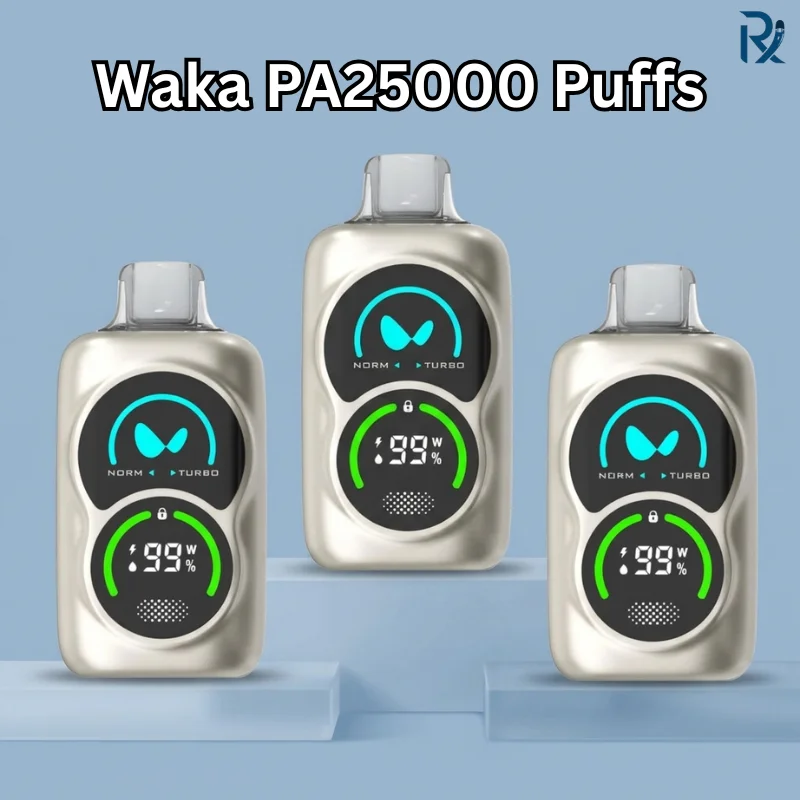
The Waka PA25000 Puffs Disposable Vape is built for long-term use, combining a high puff count with a rechargeable battery — a solid pick if you don’t want to repurchase often.
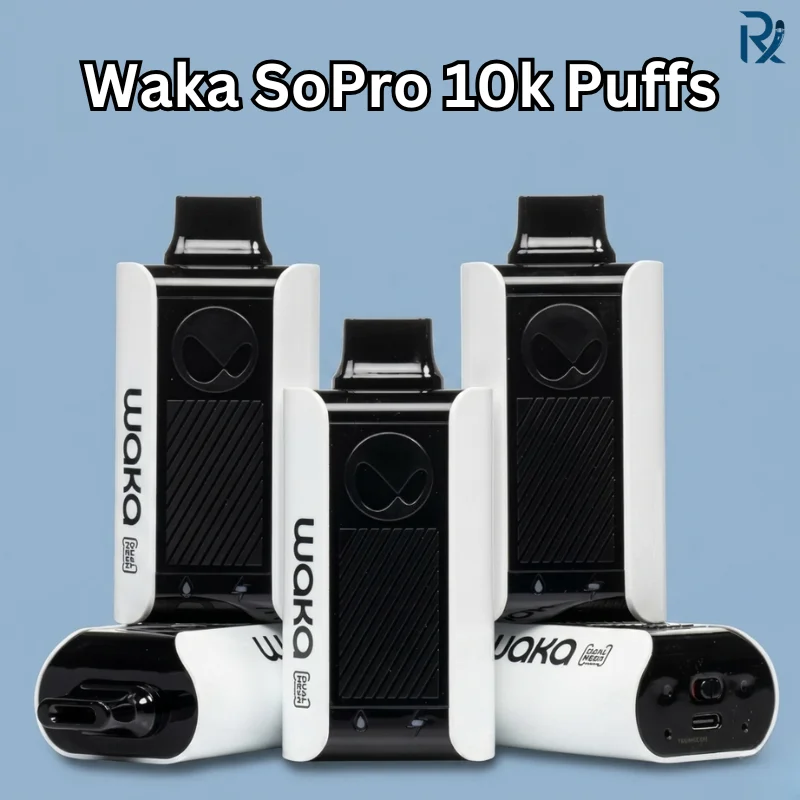
The Waka Sopro 10000 Puff Disposable Vape sits in the mid-range category, balancing strong flavour output with manageable size and price, and includes the standard/boost mode switch covered above.
Both fall under the broader category of disposable vape device options available through Waka Disposable Dubai, so you can compare specs side by side before deciding which fits your daily habits.
FAQ
How do you use a Waka disposable vape?
Remove the packaging and mouthpiece cap, then inhale gently through the mouthpiece. The device activates automatically — there’s no button to press.
How do you activate a Waka vape?
Activation happens through your inhale. An internal sensor detects airflow and powers the coil the moment you draw on the mouthpiece.
How do I know when my Waka vape needs charging?
Look for a blinking LED, noticeably weaker vapour, or a thinner-feeling hit. These are the main low-battery signals.
Why is my Waka disposable vape not working?
In most cases, the silicone mouthpiece cap or airflow sticker is still attached. Check for these first before assuming the device is faulty.
Can you recharge a Waka disposable vape?
Many models, including higher-capacity options like the PA25000, include a built-in Type-C charging port. Fully disposable models without a charging port cannot be recharged.
Can you refill a Waka disposable vape?
No. Waka disposables are closed systems and are not designed for refilling. Attempting to refill one can lead to leaks or battery damage.
Can you use a Waka vape while charging?
It’s best not to. Puffing while charging puts extra strain on both the battery and coil, so allow the device to finish charging before using it again.
Why is my Waka blinking but not hitting?
This usually means the airflow sensor is not detecting your draw properly, or the battery is critically low. Check for airflow blockages first, then try a full charge.
Does boost mode reduce puff count?
Yes. Boost mode uses e-liquid faster than standard mode, so regular use may reduce the total puff count compared with standard-mode estimates.
Should you remove all stickers before vaping?
Yes. Remove any sticker covering an airflow vent before first use, vapour production may become restricted or blocked.
Why does my Waka feel clogged?
This is commonly caused by condensation buildup inside the mouthpiece. Gently tap the mouthpiece downward, wipe it clean, and try again.
How long does a Waka disposable vape last?
It depends on the model’s puff count and your usage habits. Shorter draws and using standard mode generally help extend the overall lifespan of the device.
Conclusion
Using a Waka disposable vape doesn’t require any technical know-how — just removing the protective seals and inhaling gently to activate it. Most “it’s not working” issues come down to a forgotten mouthpiece cap, a low battery, or a device that’s simply reached the end of its e-liquid life. Once you know the signs to watch for — blinking LEDs, weaker vapour, or a burnt taste — along with how to spot a counterfeit and why refilling isn’t an option, charging, troubleshooting, and knowing when to replace your device becomes second nature.