
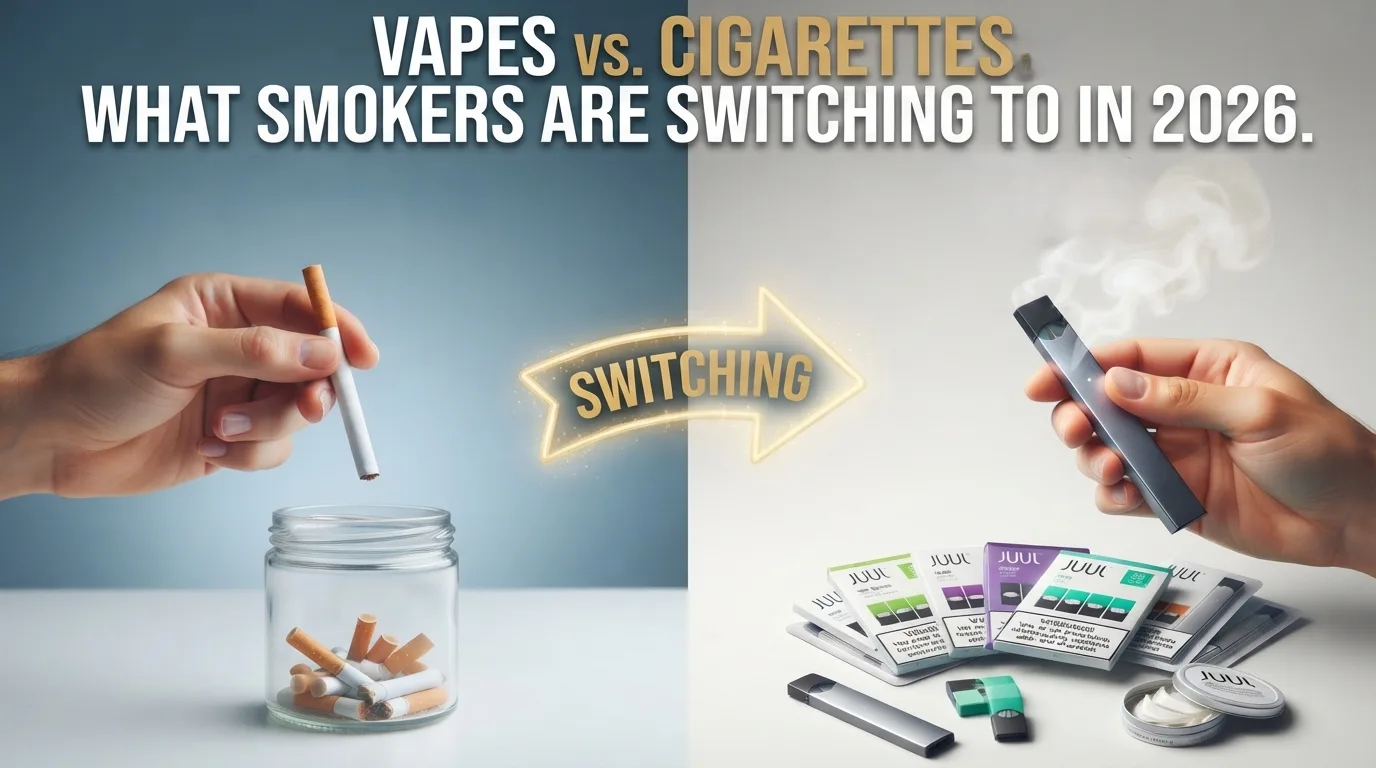
In 2026, most adult smokers moving away from cigarettes will be choosing nicotine salt pod systems, disposable vapes, refillable pod kits, heated tobacco products, or nicotine pouches. The right choice depends on how closely someone wants the experience to resemble smoking, how much convenience they need, their budget, and their long-term nicotine goals. None of these alternatives is risk-free, but public health bodies increasingly view complete switching as a lower-risk path for adults who would otherwise keep smoking.
Vapes vs. Cigarettes at a Glance
| Feature | Cigarettes | Vapes |
| Combustion | Yes | No |
| Smoke | Yes | No |
| Aerosol | No | Yes |
| Tar | Yes | No combustion tar |
| Carbon monoxide | Yes | No combustion CO |
| Nicotine | Yes | Usually |
| Odour | Strong | Lower |
| Flavour options | Limited | Wide |
| Refillable option | No | Yes |
If you’ve smoked cigarettes for any length of time, you’ve probably noticed the shift happening around you. Fewer people are lighting up outside cafes. More are pulling out sleek pod devices or disposable vapes instead. Some have switched to nicotine pouches, which they tuck under their lip with no vapour at all. A smaller group has moved to heated tobacco sticks that warm rather than burn.
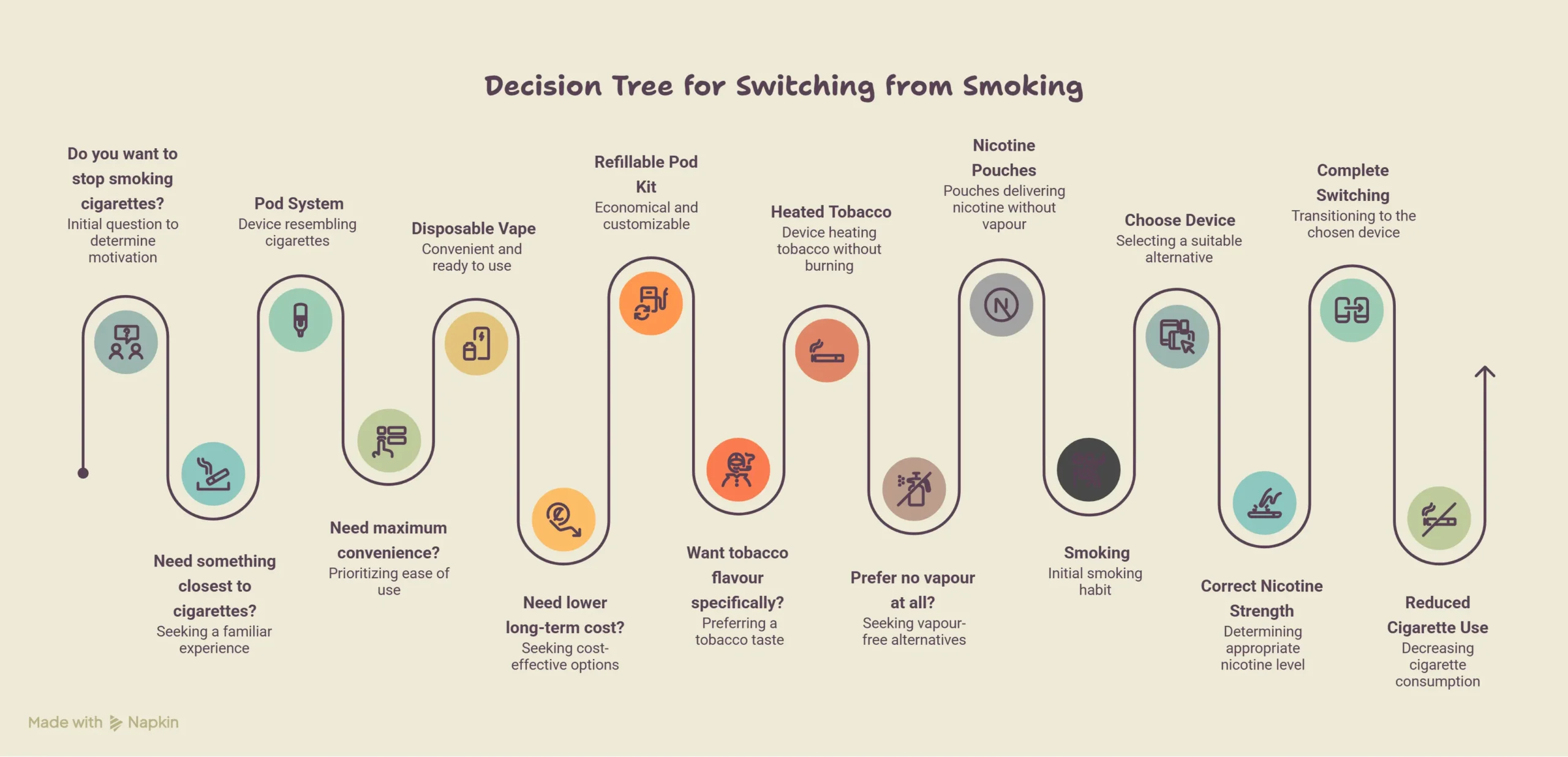
Smokers in 2026 aren’t switching to just one thing. They’re switching to whichever smoke-free option fits their habits, their wallet, and how much they miss the physical ritual of smoking. Pod systems remain the most common first step because nicotine salts closely replicate a cigarette’s throat hit. Disposable vapes appeal to people who want zero maintenance. Refillable devices attract smokers thinking about the long-term cost. Heated tobacco suits people who don’t want to give up tobacco flavour entirely. Nicotine pouches and nicotine replacement therapy (NRT) appeal to those who want nicotine without any inhalation at all.
This guide walks through what’s actually happening, why it’s happening, what the evidence says, and how to choose the right path if you’re considering a switch yourself — whether you’re comparing e-cigarettes vs cigarettes for the first time or already deciding between a nicotine salt vape and a refillable vape kit.
Why More Smokers Are Leaving Cigarettes Behind
A few forces are converging at once:
- Better Health: Moving away from the tar and carbon monoxide found in burning tobacco.
- Saving Money: Cigarette prices are rising; smoke-free alternatives are cheaper in the long term.
- Convenience: Fewer public smoking bans and a more discreet experience.
- Total Control: You pick the flavour, nicotine strength, and device style that work for you.
- No Lingering Odour: No more smelling like smoke on your clothes, hair, or in your car.
Vapes vs Cigarettes: What’s the Difference?
| Factor | Cigarettes | Vapes |
| Mechanism | Combustion (burning tobacco) | Heating e-liquid into aerosol |
| Byproduct | Smoke (tar, carbon monoxide, thousands of chemicals) | Aerosol (fewer, but not zero, harmful chemicals) |
| Nicotine source | Combusted tobacco leaf | Liquid nicotine (freebase or salt) |
| Smell | Strong, lingers on clothes and hair | Mild, flavour-based, dissipates faster |
| Regulation in the UAE | Legal for adults, heavily taxed | Legal for adults, regulated import/sale |
| Risk profile | Established long-term harms from smoke inhalation | Considered lower-risk than smoking by some public health bodies, but not risk-free |
It’s worth being precise here: “lower-risk than smoking” is not the same as “safe.” Vaping still delivers nicotine, which is addictive, and inhaling any aerosol into the lungs carries some level of risk that continues to be studied.
Pros and Cons of Vaping
Pros
- No combustion
- Less lingering smell
- Wide flavour choice
- Adjustable nicotine strengths
- Refillable options available
Cons
- Not risk-free
- Long-term research still ongoing
- Device maintenance required
- Battery charging needed
- Regulatory differences between markets
What the Latest Research Says
The UK’s National Health Service (NHS) and the Office for Health Improvement and Disparities have both stated that vaping carries a small fraction of the risk of smoking, based on the absence of combustion and tar.
Cochrane Reviews have found reasonable evidence that vaping can help some smokers quit combustible cigarettes.
At the same time, the National Academies of Sciences, Engineering, and Medicine have been more cautious, noting that while vaping is likely less harmful than smoking, it isn’t harmless, and youth uptake remains a significant public health concern unrelated to adult switching behaviour.
It’s important not to flatten this nuance: the honest, evidence-based summary is that switching completely is generally considered a harm-reduction step for adult smokers, not a health-neutral one.
Who Should Not Use Vaping Products?
Vaping products are not intended for:
- People who have never smoked
- Minors
- Pregnant individuals (unless advised by a healthcare professional)
- People trying to avoid nicotine entirely
If you fall into any of these categories, vaping is not a recommended path, and you should speak with a healthcare professional about your specific situation.
Why Pod Systems Dominate in 2026
Key reasons pod systems remain the top choice:
- Nicotine salts absorb faster and feel smoother at higher strengths than older e-liquid formulations
- Mouth-to-lung (MTL) draw mimics a cigarette’s inhale far more closely than large sub-ohm devices
- Compact size fits in a pocket the way a cigarette pack does
- Low learning curve — no wattage settings, no complicated maintenance
For smokers wanting a refillable option in this category, a RELX Device Guide is a useful starting point for understanding upkeep, and a RELX Pod Guide helps with choosing the right nicotine salt strength.
Disposable vs Refillable Vape Devices
| Factor | Disposable Vapes | Refillable Pod Kits |
| Setup | None — ready to use out of the box | Requires filling and occasional coil changes |
| Maintenance | None | Periodic cleaning, coil replacement |
| Upfront cost | Low | Slightly higher |
| Long-term cost | Higher (buy a new device repeatedly) | Lower (buy liquid, reuse device) |
| Best for | Beginners, occasional users, travel | Regular users focused on cost |
| Waste | Higher (whole device discarded) | Lower (only pods/coils discarded) |
Expert Tip: If you’re not sure which category you’ll prefer, start with a disposable device from a trusted Disposable Vape Collection for the first two to four weeks. It removes the guesswork of nicotine strength and flavour before committing to a refillable vape kit.
Nicotine Pouches vs Vapes
| Factor | Nicotine Pouches | Vapes |
| Method | Absorbed through gum tissue | Inhaled aerosol |
| Visible vapour | None | Yes |
| Discretion | Very high | Moderate |
| Resemblance to smoking | Low (no hand-to-mouth or inhale) | High (mimics draw and throat hit) |
| Device required | No | Yes |
Nicotine pouches suit smokers who want nicotine without any inhalation or who need something usable in no-vaping environments. They tend to appeal less to smokers who miss the physical ritual of smoking.
Heated Tobacco vs Vaping
| Factor | Heated Tobacco | Vaping |
| Contains tobacco leaf | Yes | No |
| Flavour range | Limited, mostly tobacco-based | Extensive (fruit, mint, dessert, tobacco, etc.) |
| Device cost | Often higher | Wide range, budget to premium |
| Consumable cost | Tobacco sticks, ongoing | E-liquid or pods, ongoing |
| Closest to the smoking sensation | Very close (real tobacco taste) | Close (draw and throat hit), less so on taste |
NRT vs Vaping
| Factor | NRT | Vaping |
| Nicotine delivery speed | Slow, steady | Fast, cigarette-like |
| Replicates the smoking ritual | No | Yes |
| Flavour/customisation | None | Extensive |
| Regulatory status | Medically approved cessation aid | Consumer product, not a medicine |
| Typical use case | Structured quit attempt | Long-term smoking substitute or quit aid |
NRT remains the only option in this list formally recognised as a medicinal smoking cessation aid in many countries. Vaping is generally treated as a consumer harm-reduction product rather than a licensed medicine, though this varies by market.
Why Dual Use Is Discouraged
Common reasons smokers fall into dual use:
- Using vapes only in situations where smoking isn’t allowed
- Underestimating nicotine strength, so cravings for cigarettes persist
- Treating vaping as a “backup” rather than a replacement
- Social smoking triggers (drinking, socialising) that vaping doesn’t fully replace at first
Myth: “If I still smoke a few cigarettes, I’m getting the full benefit.”
This is one of the most common misconceptions among people switching from smoking to vaping. Even occasional cigarette smoking still exposes the lungs to combustion byproducts like tar and carbon monoxide, the very things that switching completely is meant to avoid. Public health guidance is consistent on this point: the harm-reduction case for vaping applies specifically to smokers who switch completely, not those who reduce cigarette consumption while continuing to smoke occasionally. A few cigarettes a week isn’t a small exception — it’s still active exposure to the primary source of smoking-related harm.
Environmental Impact
Cigarette butts remain one of the most littered items on the planet, and their filters can take years to break down.
Disposable vapes introduce a different kind of waste problem: each one contains a small lithium battery that needs proper disposal, along with plastic components and e-liquid residue.
| Factor | Cigarettes | Disposable Vapes | Refillable Vapes |
| Primary waste | Cigarette butts (non-biodegradable filters) | Whole device (battery + plastic + e-liquid residue) | Pods/coils only |
| Litter volume | Extremely high globally | Growing concern | Lower |
| Battery waste | None | Yes (single-use lithium battery) | Minimal (reused device battery) |
| Recyclability | Very low | Low unless specific take-back programs are used | Higher |
Sustainability-conscious smokers increasingly favour refillable pod kits specifically to reduce battery and plastic waste compared with using disposables long-term.
Cost Comparison
A pack-a-day cigarette habit adds up quickly, and prices tend to rise year over year due to taxation.
Disposable vapes sit in the middle: cheaper than cigarettes overall, but more expensive long-term than refillable systems because the entire device is replaced each time.
Refillable pod kits require a slightly higher upfront cost, but because only the e-liquid needs replacing, the ongoing cost drops significantly.
| Product | Approx. Upfront Cost | Approx. Ongoing Cost | 1-Year Cost Trend |
| Cigarettes (pack-a-day habit) | None | Daily, rising with tax increases | Highest overall |
| Disposable vapes | Low | Frequent device replacement | High, but lower than cigarettes |
| Refillable pod kits | Moderate (device) | Low (e-liquid refills) | Lowest overall |
| Heated tobacco | Moderate–high (device) | Ongoing tobacco stick purchases | Moderate–high |
| Nicotine pouches | Low | Ongoing, moderate | Moderate |
Exact figures vary by consumption habits, local pricing, and tax rates, so treat this as a directional comparison rather than fixed numbers.
Common Mistakes Smokers Make When Switching
Nicotine strength too low → cravings for cigarettes persist. Solution: start closer to your cigarette-equivalent strength and adjust down gradually.
Chain vaping → trying to replicate a cigarette’s nicotine hit by puffing constantly. Solution: increase nicotine strength instead of puff frequency.
Expecting cigarette taste → vapes taste different by design. Solution: try tobacco-flavoured options first, then explore other flavours.
Indefinite dual use → undermines harm-reduction benefits. Solution: set a firm cutoff date for cigarettes.
Buying an advanced device first → overwhelming for beginners. Solution: start with a simple pod system or Disposable Vape Collection.
Ignoring battery maintenance → shortens device lifespan. Solution: follow proper charging habits from day one.
Choosing flavour before nicotine strength → leads to switching devices repeatedly. Solution: lock in the right nicotine level first, then explore Vape Flavours.
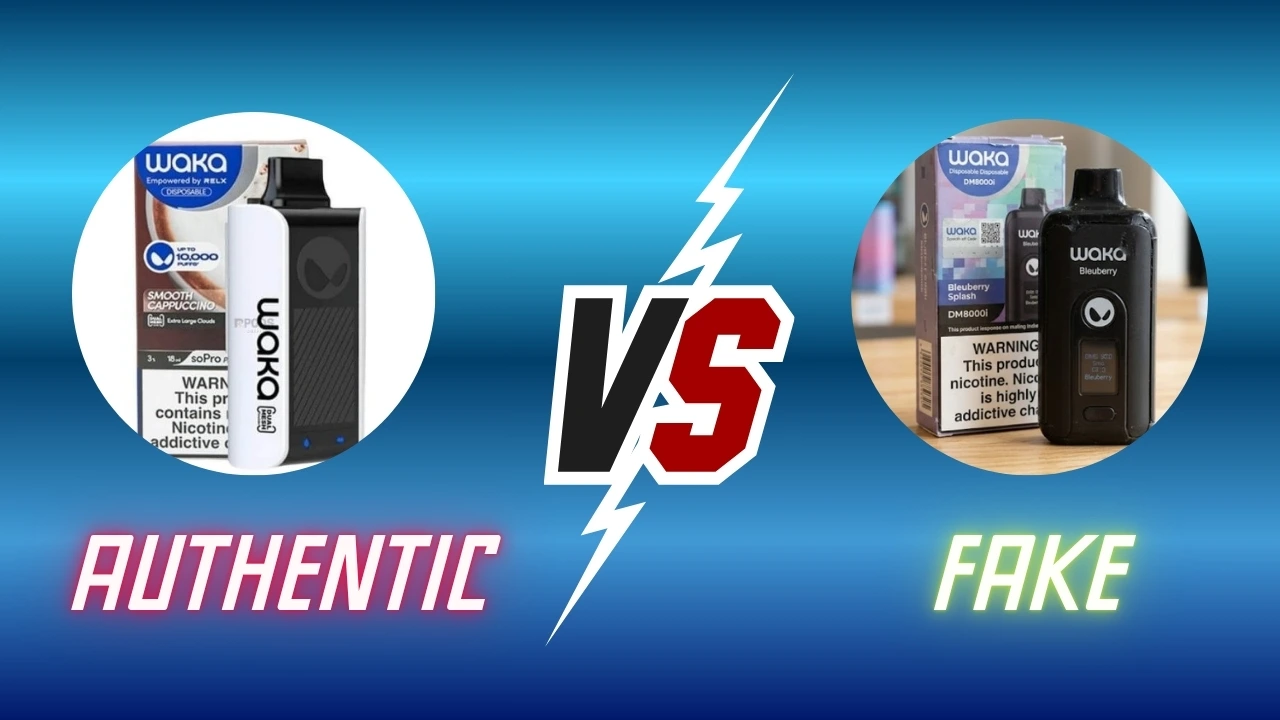
Buying counterfeit products → inconsistent nicotine delivery and unverified ingredients. Solution: buy only from a trusted shop.
How to Choose the Right Nicotine Strength
Nicotine strength should be matched to previous cigarette consumption: heavy smokers (a pack or more per day) typically need higher nicotine salt concentrations, moderate smokers need a mid-range strength, and light or social smokers can usually start lower. Choosing too low a strength is the single most common reason smokers abandon vaping and return to cigarettes.
| Smoking Habit | Suggested Starting Point |
| Heavy smoker (20+ cigarettes/day) | Higher nicotine salt strength |
| Moderate smoker (10–19/day) | Mid-range nicotine salt strength |
| Light/social smoker (under 10/day) | Lower nicotine salt strength |
Expert Tip: If cravings for cigarettes persist after a week of vaping, the most likely cause is nicotine strength being too low — not the device or flavour.
How to Switch Successfully: Step by Step
Step 1: Choose the right nicotine strength.
Match your starting strength to your previous smoking habits rather than guessing low.
Step 2: Stop buying cigarettes.
Removing easy access makes it harder to fall back into old habits during the adjustment period.
Step 3: Use the vape whenever cravings appear.
Treat it as the direct replacement for the cigarette, not an occasional substitute.
Step 4: Avoid dual use.
Commit to a full switch rather than keeping cigarettes as a backup.
Step 5: Reduce nicotine gradually if that’s your goal.
Once the habit feels stable, step down through lower nicotine strengths at your own pace.
Common Vaping Terminology
- Nicotine salts – a form of nicotine that absorbs quickly and feels smoother at higher concentrations, commonly used in pod systems
- Freebase nicotine – the traditional form of nicotine used in older e-liquids, often felt more strongly (“harsher”) at high strengths
- MTL (mouth-to-lung) – an inhale style where vapour is drawn into the mouth first, then the lungs, closely resembling a cigarette draw
- DTL (direct-to-lung) – an inhale style where vapour goes straight to the lungs, typically used with larger, higher-power devices
- Coil – the heating element inside a vape that turns e-liquid into vapour
- Pod – a small, often refillable or disposable cartridge that holds e-liquid and sometimes the coil itself
- E-liquid – the liquid mixture (nicotine, propylene glycol, vegetable glycerin, flavouring) that’s heated to produce vapour
How to Choose Your First Vape
Before buying, consider:
- Smoking frequency – heavier smokers generally need higher-strength, MTL-style devices
- Preferred nicotine strength – match to your cigarette-equivalent consumption
- Budget – disposables are cheaper upfront; refillables are cheaper long-term
- Maintenance preference – zero-maintenance disposables vs. refillable systems requiring occasional care
- Desired flavour profile – tobacco-style for a familiar taste, or fruit/mint/dessert for variety
Buying Vapes in the UAE
A few practical points for UAE-based smokers considering the switch:
- Adult-only sales. Vaping products are intended strictly for adult smokers already using nicotine, not for anyone under the legal age.
- Buy compliant products. Stick to devices and e-liquids that meet UAE import and safety requirements rather than unverified imports.
- Use authorised retailers. Purchasing from an Authentic Retailer reduces the risk of counterfeit devices with inconsistent nicotine strength or unverified e-liquid ingredients.
- Avoid counterfeit devices. Counterfeit products are a known issue in the vaping market generally, and they can deliver inconsistent nicotine levels or use unverified ingredients.
Which Option Is Best for You?
| Smoker Type | Best Fit |
| Heavy smoker | High-strength pod system |
| Moderate smoker | Mid-strength pod system or refillable kit |
| Social/occasional smoker | Disposable vape |
| Budget-conscious, regular user | Refillable pod kit |
| Frequent traveller | Disposable vape (no charging/refilling hassle) |
| Wants the lowest maintenance | Disposable vape |
| Wants tobacco flavour | Heated tobacco |
| Wants zero vapour/inhalation | Nicotine pouches |
| Reducing nicotine gradually | NRT or gradually stepped-down pod strengths |
What Happens After Switching
The first few weeks are the most important part of your journey. Here is how it usually goes:
- The First Few Days: Expect a little bit of “calibration.” The draw of a vape feels different from a cigarette, and your throat might feel slightly different at first. This is normal—just take it slow.
- The First Week: This is your adjustment period. If you’re finding yourself still craving cigarettes, don’t blame the device—it’s usually just a sign that your nicotine strength is a bit too low.
- Weeks 2–4: This is when the “vaping routine” starts to feel natural. By the end of the month, most people report that the automatic urge to reach for a cigarette has significantly faded, provided their device matches their nicotine needs.
Quick Tip: Don’t overthink the long-term. Focus on making it through these first 30 days completely smoke-free. That’s where the real progress happens.
Myths vs Facts
| Myth | Fact |
| Vaping is just as harmful as smoking | Vaping avoids combustion entirely, and public health bodies, including the NHS, consider it substantially less harmful than smoking, though not risk-free |
| Nicotine causes cancer | Nicotine is addictive, but it is not the primary carcinogenic component of cigarette smoke; the carcinogens come mainly from combustion byproducts |
| Bigger clouds mean stronger nicotine | Cloud size is determined by device wattage and e-liquid composition, not nicotine strength |
| Disposable vapes are always better | Disposables offer convenience but cost more in the long term and generate more device waste than refillable systems |
FAQ
Is vaping safer than smoking?
Public health bodies, including the NHS, consider vaping substantially less harmful than smoking because it avoids combustion, but vaping is not risk-free, and long-term data is still developing.
Can vaping help smokers quit?
Some evidence, including Cochrane Reviews, supports vaping as an effective tool for smokers trying to quit combustible cigarettes, particularly when nicotine strength is matched appropriately.
Is dual use harmful?
Yes — continuing to smoke even occasionally while vaping means still inhaling combustion byproducts, which limits the harm-reduction benefit of switching.
What nicotine strength should I choose?
Match your strength to your previous cigarette consumption: heavier smokers generally need higher nicotine salt concentrations to avoid cravings.
Disposable or refillable — which should I choose?
Disposables suit beginners and occasional users wanting zero maintenance; refillable kits suit regular users focused on long-term cost and less waste.
Are nicotine pouches better than vaping?
Neither is universally “better” — pouches offer full discretion with no vapour, while vapes better replicate the physical smoking ritual.
Which vape feels closest to smoking?
Nicotine salt pod systems using a mouth-to-lung draw most closely replicate a cigarette’s throat hit and inhale.
Is vaping cheaper than smoking?
Generally, yes, especially with refillable pod systems, though disposable vapes used heavily can narrow that cost gap.
Can I reduce nicotine gradually while vaping?
Yes — many pod systems and e-liquids come in stepped nicotine strengths, allowing gradual reduction over time.
Which vape is best for beginners?
A simple disposable vape or an entry-level pod system, since both have minimal setup and maintenance.
Can I travel with my vape?
In most cases, yes, though regulations vary by country and airline; always check local vaping laws before travelling, including within the UAE.
Why are pod systems so popular?
Their compact size, simple operation, and nicotine salt formulation make them the closest match to a cigarette’s experience for most beginners.
What are nicotine salts?
A form of nicotine that absorbs faster and feels smoother at higher concentrations than traditional freebase nicotine used in older e-liquids.
Are refillable devices better than disposables?
They’re better suited to regular, long-term users focused on cost and waste reduction, but disposables remain better for convenience and occasional use.
Can vaping stain teeth?
Vaping generally causes far less teeth staining than smoking, since it doesn’t produce tar, though some staining from certain e-liquids is still possible.
Why do smokers switch to vaping?
Common reasons include health concerns about combustion, cost savings, workplace restrictions, and reduced smell compared to cigarettes.
What are heated tobacco products?
Devices that heat real tobacco leaf to release nicotine and flavour without burning it, avoiding combustion while retaining a tobacco taste.
What is synthetic nicotine?
Nicotine is produced through a chemical synthesis process rather than extracted from tobacco leaf and is used in some newer vape products.
Are disposable vapes disappearing?
Not entirely, but regulatory pressure around environmental waste is pushing some markets toward stricter rules on disposable devices.
Which smoke-free alternative suits me best?
It depends on your priorities: pod systems for the closest cigarette resemblance, disposables for convenience, refillables for cost, heated tobacco for tobacco flavour, and pouches for zero vapour.
Is nicotine addictive regardless of the delivery method?
Yes — nicotine is addictive whether delivered through cigarettes, vapes, pouches, or NRT; only the surrounding health risks differ by delivery method.
Do vapes produce secondhand exposure like cigarettes?
Vape aerosol dissipates faster than cigarette smoke and doesn’t produce sidestream smoke from a burning ember, though it doesn’t necessarily eliminate exposure to bystanders.
Should I try vaping if I’ve never smoked?
No — these products are intended as alternatives for existing adult smokers, not as a starting point for nicotine use.
Where should I buy vapes in the UAE?
Always buy from an authorised, compliant retailer to avoid counterfeit devices and ensure consistent nicotine delivery and verified ingredients.
Final Thoughts
There’s no single “best” alternative to cigarettes — there’s only the best alternative for your specific habits, budget, and goals.
Pod systems remain the dominant choice in 2026 because they most closely replicate the cigarette experience, but disposables, refillables, heated tobacco, nicotine pouches, and NRT all serve real, valid purposes depending on what a smoker is trying to achieve.
What matters most, according to available public health guidance, is switching completely rather than adding vaping on top of continued smoking.